The Wearable Trap: Why Your Watch Knows Your HRV But You Still Feel Like Garbage
Data Is Not Discipline
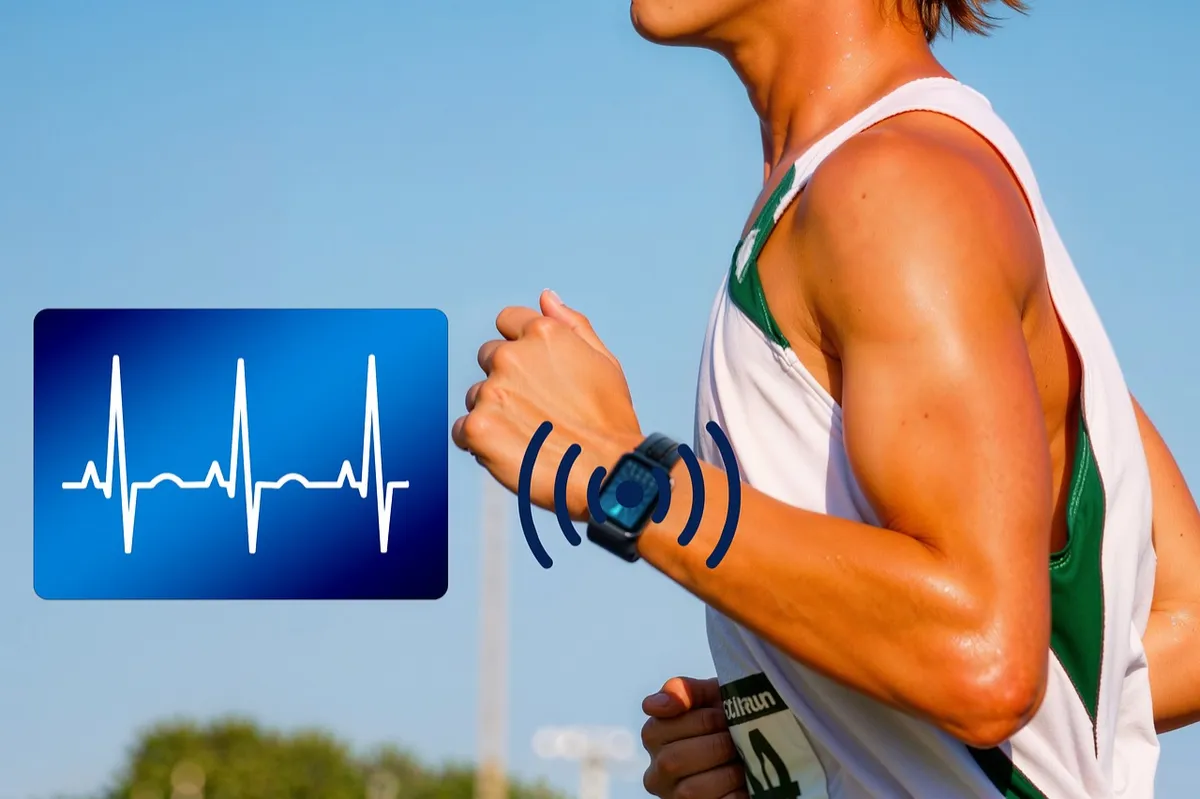
Your watch knows your heart rate. It knows your steps. It knows your sleep score, your resting pulse, your HRV, your readiness, your calories, your respiratory rate, and probably more about your bedtime than you do.
So here is the uncomfortable question.
Why do you still feel like garbage?
Why are you still tired at 2 PM? Why is your waist still stubborn? Why are your workouts inconsistent? Why are you still waking up unrested, over-caffeinated, under-hydrated, and irritated by problems you should be able to handle?
Because data does not fix weak habits.
Wearables are everywhere right now. The American College of Sports Medicine named wearable technology the number one fitness trend for 2026, pointing to devices that track real-time and trend-based data like heart rate, HRV, sleep, GPS, and other health metrics.
That is useful.
But useful is not the same as transformational.
A watch can measure your decline. It cannot stop it for you.
The Problem: Men Are Tracking More and Executing Less
A lot of men over 40 have become professional observers of their own poor health.
They can tell you their HRV was low this morning, their sleep score was trash, and their readiness was down. Then they go right back to the same habits that created the problem: late screens, poor hydration, random eating, skipped movement, stress overload, and pretending 5 or 6 hours of sleep is enough.
That is not optimization. That is self-surveillance without leadership.
The wearable trap is simple: you start believing that because you are measuring something, you are managing it. But measurement is only the first step. Management requires action. Standards. Repetition. Follow-through.
Your watch can show the smoke. You still have to put out the fire.
HRV Is Not a Moral Score
Heart rate variability has become one of the most misunderstood numbers in men’s health.
A higher HRV generally suggests your body may be more recovered and adaptable. A lower HRV may suggest stress, poor sleep, illness, dehydration, alcohol, heavy training, or nervous system strain. That can be helpful information.
But too many men treat HRV like a daily judgment from the fitness gods.
HRV low? They panic.
HRV high? They think they are invincible.
Readiness score down? They use it as an excuse.
Sleep score bad? They obsess over the number instead of fixing the night.
That is backwards.
Even cardiovascular experts warn that HRV can be challenging to collect and interpret in clinical practice. The American College of Cardiology notes that consumer wearables have made physiologic data more accessible, but they also create challenges because clinicians are increasingly asked to interpret data that may not be simple or clinically definitive.
In plain English: your HRV is a signal, not a commandment.
Use it as feedback. Do not let it run your life.
Your Watch Is Not the Problem. Your Reaction Is.
Wearables can be excellent tools when used correctly. They can reveal patterns you used to ignore. They can show that your sleep tanks after late meals. They can expose how little you move on workdays. They can confirm that stress follows you into the night. They can remind you that your “active lifestyle” is mostly a story you tell yourself.
That is valuable.
But the device becomes a problem when it replaces common sense.
You do not need a readiness score to know that five hours of sleep, poor hydration, and late-night snacking will wreck your day. You do not need a sleep graph to know that scrolling in bed is not recovery. You do not need a calorie estimate to understand that random grazing adds up. You do not need a stress alert to know your schedule is owning you.
The watch is not supposed to become your brain.
It is supposed to support your standards.
Accuracy Has Limits
Here is another hard truth: not every number on your wrist is as precise as you think.
Consumer wearables have improved fast, but the validity of smartwatch-derived metrics can vary depending on the metric, device, user, activity, environment, and purpose. A 2026 review in Sensors found stronger support for wearables as tools for tracking trends within a person than for precise clinical or physiological measurement across all situations.
That matters.
Your step count may be useful. Your resting heart rate trend may be useful. Your sleep timing may be useful. But pretending every metric is perfect science is lazy thinking.
Even the American Heart Association has warned that many personal wearable devices have not been proven accurate or reliable for real-world use in certain areas, such as cuffless blood pressure measurement during daily activity, sleep, exercise, or after medications that affect blood pressure.
That does not mean throw the device away.
It means stop worshiping it.
Track trends. Look for patterns. Then act like a grown man.
The Real Reason You Still Feel Bad
Most men do not feel bad because they lack data. They feel bad because their daily standards are weak.
They sleep poorly, then ask why recovery is low. They drink coffee all morning and barely touch water, then wonder why energy crashes. They sit for hours, then act confused when their body feels stiff and tired. They eat randomly, skip protein, graze at night, and still expect fat loss. They use stress as an identity instead of treating it like a signal that the system needs correction.
Your watch can detect pieces of this.
It cannot force you to change.
And that is where the trap begins. Men over 40 can hide behind metrics because metrics feel productive. It feels like action to check your sleep score. It feels like progress to review your HRV. It feels like control to monitor recovery.
But if nothing changes in your behavior, it is just digital noise.
The Sleep Score Problem
Sleep tracking is one of the biggest reasons men buy wearables, and it can be helpful. But sleep health is bigger than a single score.
The American Heart Association states that sleep health is best assessed through multiple methods, including sleep diaries, validated questionnaires, wearable devices, alertness measures, and, when needed, polysomnography, which remains the gold standard for sleep apnea and sleep architecture.
That means your watch is one piece of the picture.
Not the whole picture.
If your watch says you slept well but you wake up foggy, irritable, and exhausted, listen to the body. If your watch says your sleep was poor but you feel sharp, calm, and strong, do not let the number ruin your day.
Men need to stop outsourcing self-awareness to a screen.
A sleep score is feedback. Your actual performance is evidence.
The Over-Optimization Trap
There is a bigger trend happening now: men are drowning in optimization.
Cold exposure. Red light. Readiness scores. Glucose monitors. HRV apps. Sleep rings. Supplements. Breathwork devices. AI fitness plans. Recovery dashboards.
Some of it can help. Most of it becomes distraction when the basics are ignored.
The wellness world is already seeing an anti-optimization wave, with people questioning whether constant tracking and self-measurement are actually making them healthier or just more anxious. Wearables like Oura and Whoop are part of the current stress, sleep, and recovery culture, but the bigger conversation is shifting toward whether all this measurement is actually improving life.
That is the right question.
A man who tracks everything but follows through on nothing is not optimized. He is distracted.
What Men Over 40 Should Track Instead
Do not overcomplicate this.
Track the numbers that lead to better behavior.
Track sleep duration, not just sleep score. Track steps, not just “active calories.” Track resting heart rate trends, not one random daily reading. Track waist measurement, not just scale weight. Track training consistency, not workout fantasies. Track water intake if dehydration is your weak point. Track late-night eating if your kitchen habits are costing you results.
The goal is not to collect more data.
The goal is to close the gap between what you know and what you do.
That gap is where most men are losing.
How to Use a Wearable Without Becoming Soft
Use your wearable like a dashboard, not a dictator.
If HRV is low, ask why. Did you sleep poorly? Eat late? Hydrate badly? Train too hard? Carry too much stress? Travel? Get sick? Then make a decision based on the whole picture.
If your steps are low, move. If your sleep duration is weak, protect bedtime. If your resting heart rate is trending up, pay attention to stress, recovery, hydration, and illness. If your watch keeps showing poor recovery, stop acting surprised and start fixing the behaviors that keep causing it.
This is not complicated.
The device gives feedback. You provide leadership.
The Basics Still Beat the Gadgets
A man over 40 does not need to become anti-technology. He needs to become anti-excuse.
Your wearable can help you see patterns, but the work is still painfully simple: sleep 7–8 hours, hydrate properly, walk daily, eat with structure, get enough protein, stop grazing at night, stretch enough to move well, and train consistently without turning every session into punishment.
That may not sound futuristic.
Good.
Because your body does not care what year it is. It responds to repeated behavior.
The basics are not outdated. They are just not as shiny as a new device.
The Bottom Line
The wearable trap is believing that more data automatically creates better health.
It does not.
Your watch may know your HRV, but it does not know whether you are willing to fix your habits. It can tell you your sleep was bad, but it cannot shut off your phone. It can count your steps, but it cannot make you walk. It can estimate your recovery, but it cannot force you to stop living like stress is your personality.
Wearables are tools. Useful tools. Sometimes powerful tools.
But they are not standards.
If your watch knows everything about your body and you still feel like garbage, the problem is not missing data.
The problem is missing execution.
Track less if you need to. Act more.