Why Men Over 40 Gain Belly Fat Even When They “Barely Eat”
The uncomfortable truth about underreporting, grazing, stress eating, and low muscle mass
“I barely eat” sounds convincing until you look at the full week.
Most men over 40 do not gain belly fat because their body has suddenly turned against them. Age changes the rules, but it does not cancel accountability. The real issue is usually a combination of underreported food intake, small bites that never get counted, stress-driven eating, liquid calories, lower daily movement, poor sleep, and the slow loss of muscle that makes the body less forgiving than it used to be.
That is the hard truth. You may not be eating huge meals, but that does not mean you are eating in a way that supports fat loss. There is a difference between “not eating much” and eating with precision.
Men often remember the meal they skipped, the fries they avoided, or the salad they ordered, but they forget the cream in the coffee, the sauce on the plate, the handfuls between calls, the bites while cooking, the second serving at dinner, the weekend drinks, and the late-night “small snack” that quietly pushes them out of a deficit.
The body does not care what you remember. It responds to what you repeatedly do.
The Problem: You Are Not Eating “Barely.” You Are Eating Blind.
Most successful men track business numbers with discipline. Revenue, margins, deadlines, sales calls, investments, meetings, and performance reviews all get measured because they matter. Then those same men treat their body like a guessing game and wonder why the waistline does not move.
That gap is the problem.
When a man says, “I barely eat,” what he often means is that he does not sit down for many structured meals. But belly fat is not only built from big meals. It is built from patterns.
Grazing, stress snacking, oversized restaurant portions, sauces, alcohol, poor sleep, and inconsistent movement all add up, especially after 40 when muscle mass is harder to maintain and the margin for error is smaller.
You may not feel like you are overeating, but feelings are not data. If your waist is growing, your body is giving you feedback. Ignoring that feedback because your memory says otherwise is how men stay stuck for years.
The Hard Truth: Belly Fat Is Usually Built in the Margins
Most men picture overeating as obvious. They imagine massive plates, desserts every night, and complete lack of discipline. But for men over 40, the damage is usually more subtle. It happens through the margins, and that is exactly why it is dangerous.
The margin is the food that “doesn’t count” in your mind. It is the bite off your kid’s plate, the handful from the pantry, the extra dressing, the second coffee with add-ins, the late-night snack because the day was stressful, the drink at dinner, the airport food, the client meal, or the weekend looseness that somehow gets mentally separated from the rest of the week.
None of those choices may look dramatic by itself. Together, they can erase the entire calorie deficit you thought you created.
That is why “barely eating” is often not a metabolism diagnosis. It is an awareness issue.
Reason 1: You Underreport Without Realizing It
Underreporting does not always mean dishonesty. Most of the time, it means poor awareness. Men are busy, distracted, stressed, and moving from one obligation to another, so they report what they think they ate instead of what actually happened.
A man might say he had chicken and vegetables for dinner, which sounds disciplined. But the chicken may have been cooked in oil, covered in sauce, paired with extra bites before the meal, followed by something sweet, and supported by a drink he does not count because it was “just one.” The meal he remembers and the meal his body processed are not the same meal.
This is where men need to stop negotiating with reality. For one full week, track what you actually consume. Not forever. Not obsessively. Just long enough to expose the leaks.
Track the meals, drinks, sauces, snacks, bites, leftovers, weekend meals, and anything eaten while standing up, driving, watching TV, or working late.
If it goes in your mouth, it belongs in the audit.
That level of honesty is uncomfortable, but it is also liberating. Once you see the pattern clearly, you stop blaming your age and start fixing the system.
Reason 2: Grazing Destroys Structure
Grazing is one of the easiest ways for men over 40 to sabotage fat loss while still believing they are disciplined. It does not feel like overeating because there is no single moment where the damage looks obvious.
It is not a full plate. It is not a planned meal. It is just a bite here, a handful there, and a small snack that turns into a daily pattern.
The problem is that grazing keeps your eating window messy and your awareness low. It turns food into background noise. Instead of eating with intention, you start feeding boredom, stress, fatigue, or convenience. That is not fuel. That is a lack of structure.
Intermittent fasting can help because it creates boundaries, but fasting only works when the eating window is controlled.
If you fast for part of the day and then spend the rest of the day grazing, you did not build discipline. You simply delayed the chaos.
A better standard is simple: eat intentional meals, reduce random snacking, and stop pretending small bites are invisible. They are not invisible to your body.
Reason 3: Liquid Calories Create Silent Damage
Liquid calories are dangerous because they do not feel like food. They are easy to consume, easy to forget, and easy to justify. Coffee add-ins, sweet drinks, juices, restaurant beverages, alcohol, mixers, and “just a little” extras can all contribute meaningful calories without creating much fullness.
Alcohol deserves special attention because it usually creates more than one problem. It adds calories, lowers food discipline, disrupts sleep, and makes the next day harder.
Even if a man is not drinking heavily, consistent social drinks, business dinners, weekend pours, or mixed drinks can create enough weekly calorie creep to stall fat loss.
The issue is not morality. The issue is math and consequences.
You cannot claim you barely eat while drinking calories, grazing at dinner, sleeping poorly, and then making weaker food choices the next day. That is not a broken metabolism. That is a predictable chain reaction.
Reason 4: Stress Eating Disguises Itself as “Needing Fuel”
Successful men often do not call it stress eating. They call it needing fuel, taking the edge off, grabbing something quick, or rewarding themselves after a long day. The label changes, but the pattern stays the same.
Pressure builds from work, family, travel, finances, leadership, and responsibility. If a man has no real way to downshift, food becomes the easiest relief valve. It is available, socially acceptable, and immediate. It does not ask for reflection. It just delivers temporary comfort and leaves the evidence around the waist.
This is where men need to be honest. If you reach for food when you are tired, irritated, overwhelmed, bored, or mentally drained, that is not hunger driving the decision. That is stress looking for an outlet.
The fix is not to “be tougher” in some vague motivational sense. The fix is to build a better response. Walk before you snack. Drink water before you decide you are hungry. Take five minutes to breathe before raiding the kitchen at night. Stretch instead of scrolling. Protect 7-8 hours of sleep as often as possible, because exhausted men make weaker food decisions.
You do not need more shame. You need better regulation.
Reason 5: Low Muscle Mass Makes the Body Less Forgiving
This is the part many men ignore because it is easier to talk about calories than muscle.
After 40, muscle becomes a non-negotiable asset. Less muscle means a smaller engine. A smaller engine burns less energy, handles carbohydrates less effectively, and gives you less margin for error. This is why a man can feel like he is not eating much and still gain belly fat. His output has dropped, his muscle has declined, his movement is lower, and his intake is higher than he thinks.
That combination is brutal.
The answer is not starvation. Starving yourself may make the scale drop briefly, but if you lose more muscle in the process, you make the long-term problem worse. The goal is not just to become lighter. The goal is to become leaner, stronger, more capable, and harder to break.
That requires strength training, daily movement, protein-focused meals, hydration, sleep, and consistent food boundaries. It also requires patience, because rebuilding a stronger body after 40 is not about panic. It is about execution.
The FFIT40 Belly Fat Audit
Before blaming hormones, age, travel, stress, or your schedule, run a simple seven-day audit. This is not a punishment plan. It is a truth plan.
Track every bite and drink for seven days without cleaning it up just because you are tracking. You need to see your real habits, not your best behavior. Include sauces, oils, snacks, drinks, weekend meals, bites while cooking, food eaten while standing, and anything consumed late at night.
Measure your waist once per week under the same conditions. The scale can fluctuate from water, sodium, travel, digestion, and stress, but the waist tells a clearer story about belly fat. Do not suck in, do not angle the tape, and do not negotiate with the number.
Hit 10,000 steps daily. Walking is not a dramatic fat-loss hack, which is exactly why men overlook it. But a low-output lifestyle combined with inaccurate food awareness is one of the fastest ways to gain belly fat after 40. Steps create daily movement you can repeat, even when life is busy.
Drink 4L of water daily. Many men confuse thirst, fatigue, and mental fog with hunger. Hydration will not solve everything, but dehydration makes almost everything harder.
Use intermittent fasting as structure, not as a free pass. A fasting window can help reduce mindless eating, but it only works if your meals are controlled when the window opens. Fasting followed by chaotic eating is not discipline. It is delayed damage.
Strength train consistently to rebuild the engine. You do not need random punishment workouts. You need a repeatable plan that supports muscle, posture, metabolism, and long-term function. The goal is to preserve and build lean tissue while reducing the belly fat that is holding you back.
Prioritize stretching and mobility because stiff men move less, train worse, and recover poorly. Mobility work is not soft. It keeps your body usable so you can keep showing up.
Protect 7-8 hours of sleep whenever possible. Poor sleep makes hunger louder, cravings stronger, stress higher, and discipline weaker. A man who treats sleep like an afterthought will eventually see that neglect show up in his waistline.
The Bigger Picture
This is not about becoming obsessed with food. It is about becoming honest with yourself.
Your family does not need a man who keeps saying he is trying while repeating the same patterns. Your partner does not need a man who blames age but refuses structure. Your kids do not need to inherit your excuses. Your community does not need another high-performing man who wins in public but quietly loses control of his health behind the scenes.
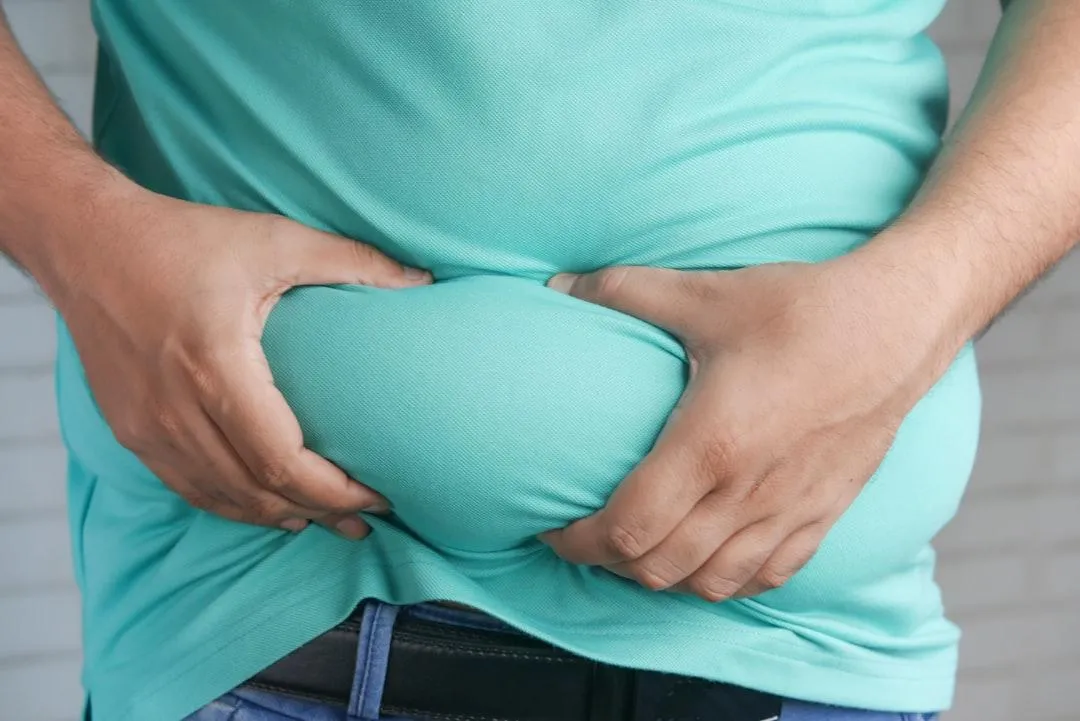
Belly fat after 40 is not random. In most cases, it is the result of leaks in the system: inaccurate tracking, grazing, liquid calories, stress eating, low muscle mass, low movement, poor sleep, and inconsistent standards.
The good news is that leaks can be fixed.
But not while you keep pretending they are not there.
Change Your Strategy
“I barely eat” is not a strategy. It is usually a sign that you are not tracking closely enough, moving consistently enough, building enough muscle, sleeping well enough, or managing stress with the discipline your life now requires.
The goal is not to eat less until you become weaker. The goal is to build a stronger system: structured meals, fewer simple carbs, controlled portions, more protein, daily steps, proper hydration, strength training, mobility, fasting compliance, and 7-8 hours of sleep.
Stop blaming age before you audit your habits.
Track the truth.
Build the muscle.
Cut the grazing.
Control the stress.
Lead your body like it matters.