
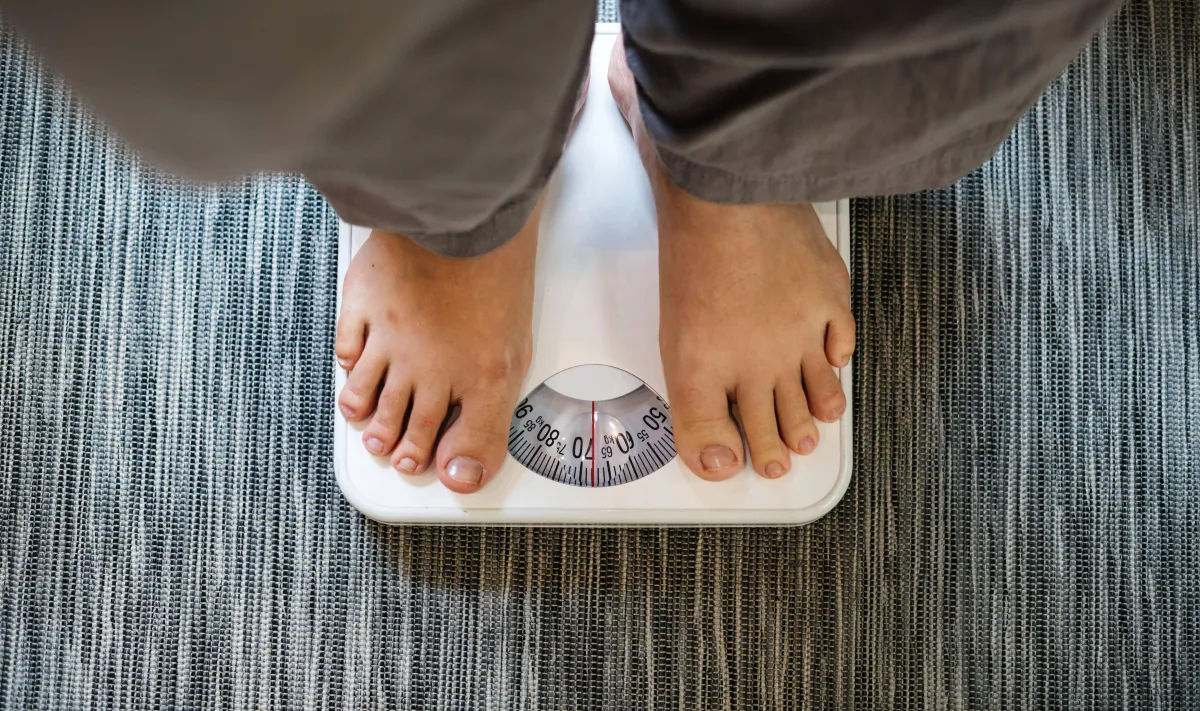
Your Scale Is Lying: The Metrics Men Over 40 Should Actually Track
Most men over 40 are still worshipping the wrong number.
The scale says you’re up 3 pounds, so you panic.
The scale says you’re down 5 pounds, so you celebrate.
Both reactions can be dead wrong.
Because the scale doesn’t tell you if you’re losing fat, losing muscle, holding water, improving insulin sensitivity, sleeping better, walking more, getting stronger, or becoming the kind of man your family can actually rely on.
It just gives you a number.
And if you’re over 40, chasing that number like it’s the final verdict is amateur hour.
FFIT40’s approach is built around the same no-fluff, high-accountability structure reflected in the newsletter reference: challenge the lie, expose the cost, then give the man a tactical path forward.
The Problem: Men Over 40 Are Measuring the Wrong Thing
You’ve been trained to think progress means the scale drops.
That might have worked when you were 25 and could get away with bad sleep, random workouts, and weekend damage control.
Not anymore.
After 40, the game changes. Muscle becomes more valuable. Recovery becomes more expensive. Stress leaves a bigger footprint. Belly fat becomes more stubborn. Energy becomes a performance metric, not a luxury.
The National Institute on Aging emphasizes that resistance training and maintaining muscle function become increasingly important with age because muscle strength is tied to mobility, independence, and long-term function.
So, when a man over 40 brags that he “lost weight fast,” the first question should be:
What did you lose?
Fat?
Water?
Muscle?
Discipline?
Because if the weight came off but your waist stayed the same, your strength dropped, your sleep got worse, and your energy crashed, you didn’t upgrade your body.
You weakened it.
The Hard Truth: The Scale Rewards Short-Term Damage
The scale loves dehydration.
The scale loves under-eating.
The scale loves muscle loss.
The scale loves panic-driven dieting.
That’s why it’s dangerous.
You can starve yourself for a week and watch the number drop. But if your waist barely changes and your strength disappears, you’re not becoming fit. You’re becoming smaller, softer, and easier to break.
The CDC notes that waist circumference matters because belly fat is tied to higher risk for type 2 diabetes, heart disease, and stroke, with men above 40 inches at higher risk.
That means your waist tells a better story than your scale.
A man with a stable scale weight but a shrinking waist, stronger lifts, better energy, and consistent steps is winning.
A man with a dropping scale but a growing waist, weak workouts, bad sleep, and poor compliance is losing.
Read that again.
The Metrics Men Over 40 Should Actually Track
1. Waist Measurement
Your waist is the truth-teller.
Measure it once per week, same day, same conditions, around the navel or just above the hip bones. Do not suck in. Do not “angle the tape.” You’re a grown man. Measure honestly.
Your goal is not vanity.
Your goal is reducing the dangerous fat around the midsection that silently attacks your health, energy, hormones, and confidence.
Track this:
Waist: once per week
If your waist is going down and your strength is holding, you’re on the right path.
2. Energy
Energy is not some vague feeling.
It is feedback.
If you need caffeine to survive every afternoon, if you’re snapping at your family, if you’re dragging through work and checking out at home, your system is not optimized.
Track your energy daily from 1 to 5.
1 means drained.
5 means sharp, steady, and in control.
Low energy usually points to a broken foundation: poor sleep, not enough water, too many simple carbs, inconsistent fasting, weak recovery, or stress running the show.
3. Strength
Strength is your insurance policy after 40.
Not ego lifting.
Not chasing attention.
Real strength that protects your joints, preserves muscle, improves posture, supports metabolism, and lets you carry responsibility without your body folding under pressure.
Track basic performance:
Push-ups.
Rows.
Loaded carries.
Weighted vest walks.
Core control.
Grip strength.
If your strength is improving while your waist shrinks, that’s not luck. That’s recomposition.
That’s the body getting sharper.
4. Steps
Men love to complicate fat loss because complexity gives them an excuse.
Steps remove the excuse.
You don’t need a dramatic routine. You need daily movement that stacks up and keeps your metabolism honest.
Track 10,000 steps daily.
Research on daily step counts consistently links higher step volume with better health outcomes, and one JAMA Network Open cohort study examined mortality patterns based on how many days per week adults reached 8,000 or more steps.
FFIT40 standard:
10,000 steps daily. No negotiation.
Walk after meals.
Take calls standing.
Park farther away.
Use a weighted vest when appropriate.
Your body was not built to sit under fluorescent lights all day and then wonder why your waist won’t move.
5. Sleep
You do not need to glorify exhaustion.
That is not leadership.
That is poor stewardship.
A man who sleeps 4-5 hours, runs on stress, and calls it discipline is lying to himself. Sleep is where recovery, hormone regulation, appetite control, and mental sharpness get rebuilt.
The CDC states that most adults need at least 7 hours of sleep per night, and not getting enough sleep over time can contribute to serious health problems.
FFIT40 target:
7-8 hours. Consistent schedule. Dark room. No late-night chaos.
Track sleep duration and sleep quality.
If your sleep is poor, your cravings get louder, your patience gets thinner, and your workouts suffer.
That is not mystery.
That is biology.
6. Fasting Compliance
Intermittent fasting is not magic.
It is structure.
And structure is what busy men need because willpower gets weaker when life gets louder.
Track whether you followed your fasting window.
Simple score:
Yes or no.
No drama.
No emotional essay.
Did you comply?
A proper fasting window can help reduce grazing, control calories, improve discipline, and create a cleaner rhythm around food.
But do not use fasting as an excuse to under-eat protein, binge simple carbs, or “reward” yourself like a child after a hard day.
7. Food Quality
The scale will not tell you whether your food choices are building a stronger man or feeding the same old problem.
Track the basics:
Low fat.
Low simple carb.
Complex carbs within reason.
Adequate lean protein.
Enough vegetables.
No random snacking.
No “I earned it” meals every other night.
The goal is not punishment.
The goal is control.
Your food should support strength, waist reduction, steady energy, and clear thinking. If your meals leave you bloated, tired, and craving more, they are not serving you.
8. Hydration
Most men confuse hunger, fatigue, and poor focus with a lack of discipline.
Sometimes the problem is simpler.
You’re dehydrated.
FFIT40 standard:
4L of water daily.
Track it.
Do not guess.
Hydration supports training performance, appetite control, digestion, and mental sharpness. A man running on coffee and fumes is not optimized. He is borrowing energy and paying interest.
9. Stretching and Mobility
You are not “getting old.”
You are getting stiff because you keep skipping the work that keeps you usable.
Stretching is not optional after 40.
It is maintenance.
Track daily stretching, especially hips, hamstrings, calves, shoulders, and thoracic spine.
You do not need an hour.
You need consistency.
A man who refuses mobility work eventually pays for it through pain, poor posture, bad movement, and reduced training quality.
10. Consistency
This is the metric that exposes everything.
Not motivation.
Not intention.
Not what you “used to do.”
Consistency.
Track your weekly compliance across the non-negotiables:
10,000 steps daily.
4L water.
Fasting window.
Training.
Stretching.
Sleep.
Nutrition.
The man who hits 80-90% consistency for 12 weeks will beat the man who goes “all in” for 10 days and disappears.
Every time.
The FFIT40 Tracking Scorecard
Use this for the next 30 days:
Daily Metrics
Steps: 10,000
Water: 4L
Fasting window: yes or no
Nutrition compliance: yes or no
Stretching: yes or no
Sleep: 7-8 hours
Energy: 1-5
Weekly Metrics
Waist measurement
Strength performance
Bodyweight average, not daily emotion
Progress photos
Consistency percentage
Notice where the scale sits.
At the bottom.
That is where it belongs.
The Bigger Picture
This is not about becoming obsessed with tracking.
It is about becoming honest.
Because successful men are great at tracking money, meetings, deals, deadlines, and performance reviews.
Then they treat their body like guesswork.
That ends now.
You are not doing this just to look better in a shirt.
You are doing this to lead your family with more energy.
To be stronger for your partner.
To be present for your kids.
To become harder to break.
To show your community what disciplined manhood looks like after 40.
The scale can stay.
But it no longer gets the final word.
Your waist speaks louder.
Your strength speaks louder.
Your sleep speaks louder.
Your energy speaks louder.
Your consistency speaks loudest.
Your Next Step
Stop asking the scale for permission to feel successful.
Track the metrics that actually prove you are becoming stronger, leaner, sharper, and more disciplined.
Because after 40, the goal is not to weigh less.
The goal is to become harder to kill, harder to shake, and harder to replace.